REVIEW · PERTH
Boom-and-Bust: self-guided historical walking tour of Perth
Book on Viator →Operated by Stories Unseen · Bookable on Viator
Perth’s history runs on cycles. This self-guided walk strings together 200 years of change, using audio, old footage, and today’s streets so you can see how money, mining, and culture reshaped the city block by block. I like that the story doesn’t stay in the abstract; it points at places you can actually stand in, then tells you why those places changed.
Two things I really like: the tour’s decade-by-decade structure, and the way the audio includes local humor and trivia (with Riley’s dad-joke energy showing up in the narration style). One thing to consider is that because it’s self-guided, you may hit moments of silence between prompts, so it helps to keep your attention on the phone and be ready to pause if needed.
In This Review
- Key highlights you’ll feel right away
- Perth’s boom-and-bust story is built for walking
- Getting started at First Contact: phone-led, not bus-led
- Stop-by-stop: from Swan River hardship to the Bell Tower finish
- Stop 1 and 2: Perth’s big picture, then First Contact
- His Majesty’s Theatre: the first gold boom story beat
- Raine Square: heritage King Street and farming knowledge
- Hay Street Mall: the gilder era and recovery after the Great Depression
- Council House: minerals and modernism in the same breath
- Quay Perth along the Esplanade: the 1980s boom in living form
- The Bell Tower: boom-and-bust today, and a final story hook
- The audio style: Riley’s local trivia and the silence question
- What the big themes actually teach you
- Price and value: $17.93 for a self-paced city lesson
- Where to pause: turn the walk into a real afternoon
- Who should book this walk (and who should think twice)
- Should you book Boom-and-Bust? My take
- FAQ
- How much does Boom-and-Bust cost?
- How long does the tour take?
- Is this tour guided by a person?
- Where does the tour start and end?
- Do I need to buy tickets for the stops?
- Is public transportation nearby at the end?
- What equipment do I need?
- Can I cancel for free?
Key highlights you’ll feel right away
- Old footage paired with real street corners, so you understand what disappeared and what replaced it.
- Decade-by-decade storytelling, from early Swan River struggles to later booms and busts.
- Place-specific surprises, like London Court’s early air-conditioning and Perth’s fascination with heritage balconies.
- Western Australia themes that hit hard, including Indigenous farming knowledge and the rise and fallout around Alan Bond.
- A finish that ties the past to today, ending at the Bell Tower with the boom-and-bust cycle still in view.
Perth’s boom-and-bust story is built for walking
Perth doesn’t feel like a city that grew by one steady plan. It feels more like it was pulled forward by fortunes, then forced to reset when those fortunes stalled. That’s the whole point of this tour: you don’t just learn history, you watch it change in layers.
The walk works because it keeps you grounded in specific spots. One minute you’re hearing about early settlement hardship, the next you’re looking at buildings that reflect later prosperity, and then you’re nudged toward how the social vibe shifted too. The tour’s strongest quality is how it links economic swings to demolition, development, and everyday life.
If you enjoy city history that’s practical—how people lived, what got built, and what got knocked down—this format is satisfying. It also suits you if you want freedom: you can slow down, stop for photos, or linger around the places that catch your eye.
Other Perth walking tours we've reviewed in Perth

Getting started at First Contact: phone-led, not bus-led
You begin at First Contact (4 Aitken Way, Kewdale WA 6105). This isn’t a start point that needs a complicated schedule. You turn up, start the audio, and follow the on-screen guidance as you move through Perth’s CBD.
The tour uses a mobile ticket and works on your phone or tablet. You’ll get turn-by-turn navigation with maps and on-demand media and commentary, so it’s not just audio playing in the background. If you’re the kind of traveler who likes to get your bearings fast, this helps.
One practical tip: plan to walk when you have enough daylight or energy left for a few short stops. The listed stop segments are around 10 minutes each, but your total time is listed as about 1 to 4 hours depending on how long you linger and how often you pause. If you rush, it’s quicker. If you stop for drinks or extra reading on nearby signage, it stretches nicely.
Stop-by-stop: from Swan River hardship to the Bell Tower finish
This tour is designed like a timeline you can walk through. Even when you’re only at one location for a few minutes, the audio frames what came before and what’s coming next.
Stop 1 and 2: Perth’s big picture, then First Contact
You kick off with the broad story of Perth—how the city moved from early survival challenges to later self-confidence. The tour then lands you at First Contact, where your guided walk begins in earnest with audio commentary and historical footage.
Why this start works: it sets expectations. You’re not wandering without context. You know the city you’re about to explore was repeatedly reshaped by pressure—settlement hardship, economic booms, and policy decisions—so the places you see later make more sense.
If you want an easy win, take the first few minutes to watch for the story beats. If you miss them, you might later wonder why a balcony, a theatre, or an old street corner suddenly matters.
His Majesty’s Theatre: the first gold boom story beat
Next you head to His Majesty’s Theatre, where the audio focuses on Perth’s first gold boom. This is where the city starts to feel like it’s chasing a future, not just coping with the present.
A theatre location is a clever choice. It’s a reminder that money doesn’t only build banks and warehouses. It also builds public culture—places people gather, show up, and feel part of something bigger.
Your consideration here: if you’re tired or walking slowly, this stop can feel like a brief story moment rather than a “see it for an hour” attraction. It’s still worth it, just don’t expect it to function like a museum visit.
Other walking tours we've reviewed in Perth



Raine Square: heritage King Street and farming knowledge
At Raine Square, the tour shifts to heritage King Street and explores farming in Western Australia. This stop brings in the tour’s important Indigenous thread: the audio highlights ancient Indigenous farming practices and shows how knowledge shaped the land long before the city’s later expansion.
Why I think this part matters: it changes how you read the city. Farming stories make the CBD feel connected to the wider landscape, not floating above it. You start to understand why resources, food, and land management shaped settlement patterns too.
If you’re short on time, at least let this stop land before you move on. It’s one of the strongest “slow down and listen” segments.
Hay Street Mall: the gilder era and recovery after the Great Depression
In Hay Street Mall, the audio moves through two connected chapters: the city’s gilded era and its recovery after the Great Depression. This is where you see how ups and downs don’t just change buildings; they change attitude.
The practical value is that you’ll likely recognize the feeling of the story even if you don’t know dates. When times improve, the city tries to look confident. When times turn, it finds ways to rebuild and adapt.
If you’re a photo person, this area is also good for quick shots between narration prompts. Just be sure to keep your phone ready so you don’t lose the thread.
Council House: minerals and modernism in the same breath
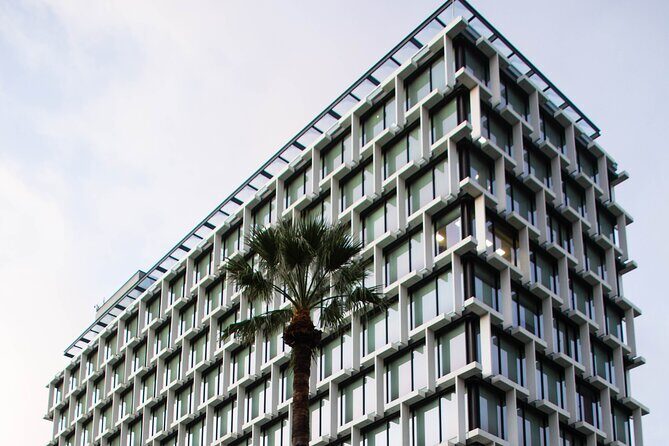
At Council House, the tour tells the story of minerals and modernism. It links material wealth to design choices—what gets built, what gets celebrated, and what gets rejected.
This is one of those stops where the audio can change how you look at architecture. Modernism often gets treated as a style. Here, it’s also treated as a reaction to the city’s economic reality and ambition.
One note: if you’re not a fan of architecture talk, you might skim this stop. But it’s still useful because it explains how Perth’s fortunes and identity showed up in built form.
Quay Perth along the Esplanade: the 1980s boom in living form
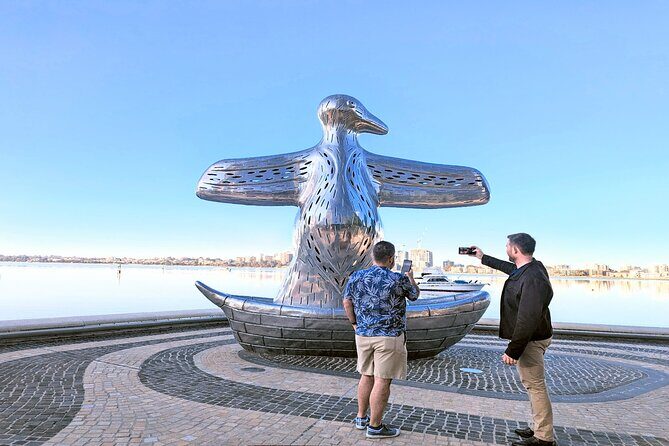
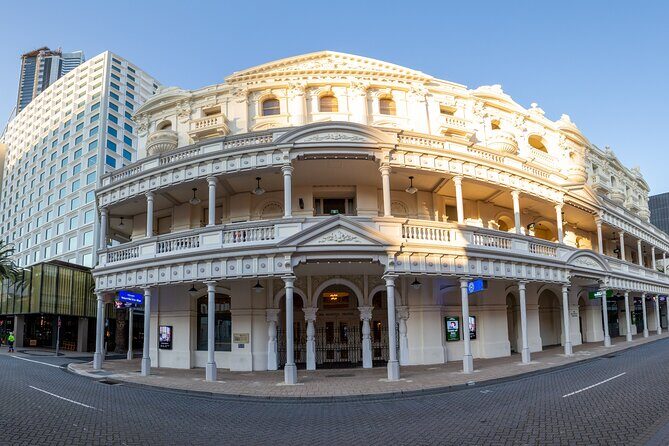
Then you reach Quay Perth and the Esplanade stretch, with a focus on the impact of the 1980s boom. The audio points you toward the through-line from that wealth to the buildings you can still see, including a mention of the Former Esplanade Hotel.
This part of the tour is where the boom-and-bust idea becomes visible. Even if you don’t know the financial details, you can sense the different mood in the buildings and the way the area was used and marketed.
If you like to plan breaks, this is also a sensible zone to slow down. It’s waterfront-adjacent, so it’s easy to take a short pause without breaking the flow of the tour.
The Bell Tower: boom-and-bust today, and a final story hook
The tour ends at The Bell Tower in Barrack Square, near Elizabeth Quay. It’s a short walk from The Esplanade train station and it’s also on the FREE Blue CAT bus route, which is great if you want an easy finish and quick public transport back out.
The last stop ties the cycle to the present. It’s meant to show that the boom-and-bust rhythm didn’t end. It just keeps changing costumes.
One more practical detail: the Bell Tower stop lists admission as not included. So if you plan to go inside for any ticketed experience there, budget for that separately.
The audio style: Riley’s local trivia and the silence question
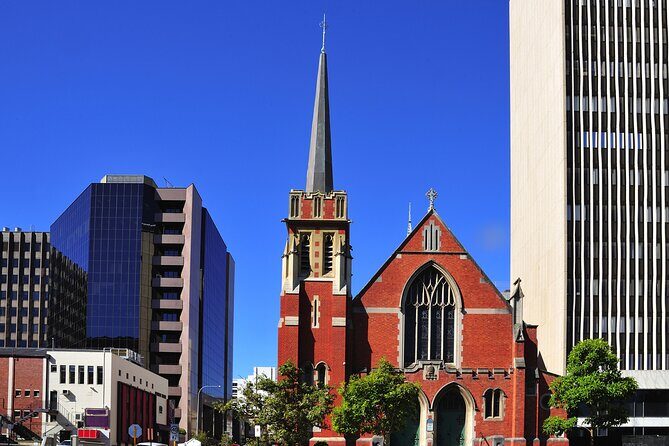
The tour’s narration has a light touch. In the audio style, you’ll hear local trivia and humor, including the kind of dad-joke delivery credited to Riley. It’s the sort of pacing that keeps you from tuning out when you’re walking between locations.
That’s also where the one main caution comes in. Because this is self-guided, you might experience longer stretches where the narration isn’t speaking. If you prefer a live guide walking beside you—talking the whole time—this setup may feel choppy.
My advice is simple: treat narration like “story moments” rather than constant commentary. If there’s a silence gap, pause and look around. Often you’ll catch the physical cue the audio is leading you toward—an architectural detail, a street alignment, or a building’s purpose.
What the big themes actually teach you
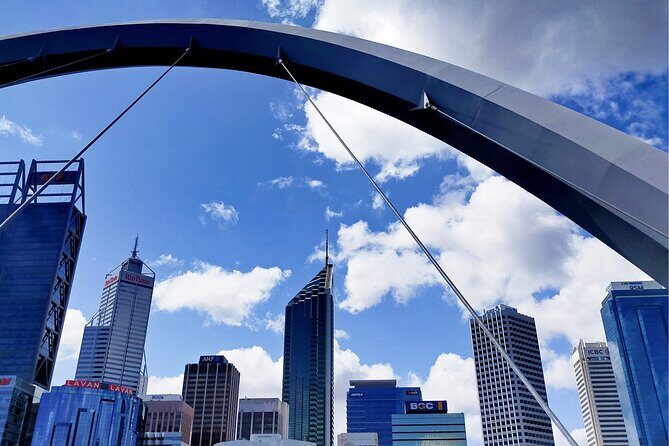
This tour doesn’t just list facts. It uses themes that help you “read” Perth.
- Heritage balconies obsession: the audio points at how preservation and taste can become a city conversation. When you notice balconies on walking streets, you start seeing them as symbols of identity and change.
- Indigenous farming knowledge: instead of treating Indigenous history as a sidebar, the tour places it in the practical world of land use and food systems.
- Modernist art and the city’s shocks: the story includes Perth’s scandalous modernist art movement, which helps explain why cultural shifts can come with friction.
- London Court and early air-conditioning: even if you don’t track dates, the idea that early comfort systems showed up here adds texture to the city’s development.
- Alan Bond’s rise/fall/rise again: this portion reminds you how booms aren’t just economic numbers. They’re tied to personalities, risk, and long-term consequences.
If you enjoy connecting the dots, these themes will stick. You’ll walk away thinking about Perth not as one thing, but as a series of decisions reacting to opportunity and pressure.
Price and value: $17.93 for a self-paced city lesson
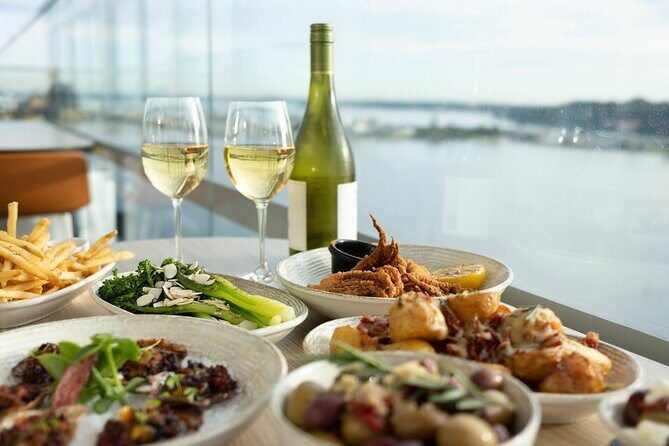
At $17.93 per group (up to 5 people), this is priced like a “cheap but smart” add-on rather than a premium guided experience. The real value is that it gives you structure and narrative for the cost of a couple of coffees.
You’re paying for:
- the audio and narration
- the turn-by-turn guidance
- and the freedom to stop and start without coordinating with anyone else
So the question isn’t just Is it affordable? It’s: will you use your phone and actually follow the prompts. If you do, it’s a strong deal for the amount of story density you cover in a walk that can fit an afternoon.
If you’re visiting with someone who prefers conversation over tech, you might find it works best when you share the roles: one person reads the next prompt while the other takes a photo or checks the map.
Where to pause: turn the walk into a real afternoon
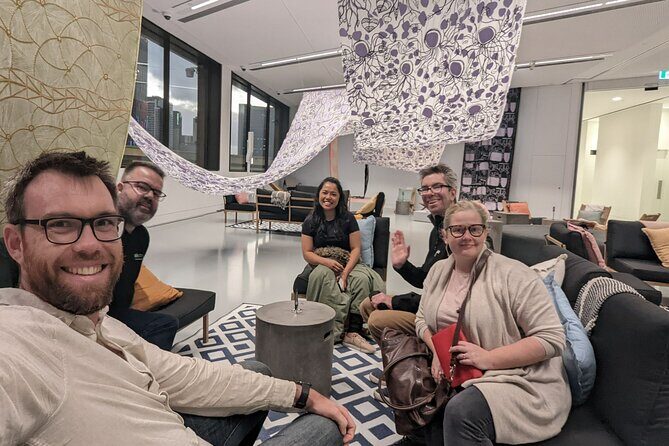
One nice thing about this area of Perth is that you can mix the tour with normal life. You’ll pass along places where it’s easy to stop for a drink or snack and keep moving afterward.
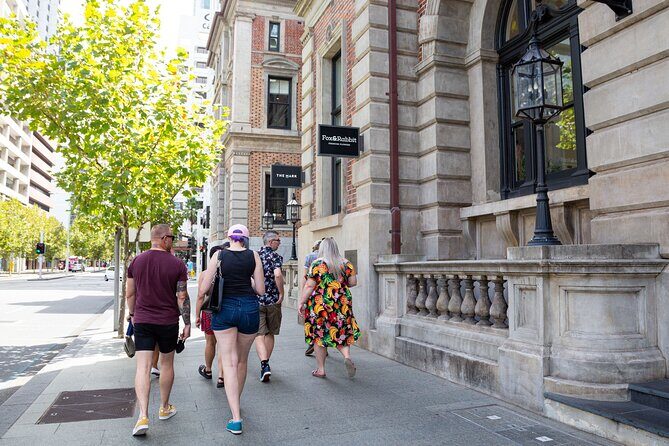
In one example, the walk paired nicely with a break at Petition, and then the group finished along the waterfront near The Reveley. That’s the practical way to use this tour: treat it like a guiding backbone, then let your hunger and curiosity decide the pacing.
If you plan ahead, bring water and keep comfortable shoes on deck. Short stops add up fast when you’re moving between CBD corners.
Who should book this walk (and who should think twice)
This works well for you if:
- you like city storytelling tied to real streets
- you want a flexible schedule with a clear beginning and end
- you’re comfortable using a phone for navigation and audio
- you enjoy humor and quick trivia in your history
It may be less satisfying if:
- you strongly prefer a live guide who talks nonstop
- you hate waiting for audio prompts and prefer constant commentary
- you want long, ticketed museum time at each stop (this is more about short, focused segments)
Should you book Boom-and-Bust? My take
I’d book it if you want a smart afternoon that turns Perth’s CBD into a timeline you can walk through. The theme-driven stops make it easier to remember what you learned, and the audio style (including the Riley-style humor) keeps the pacing light.
If you’re the kind of traveler who needs continuous narration, build in a little patience. Use silence gaps to look closely, and you’ll get more out of it instead of feeling interrupted.
Overall, it’s a good value way to understand why Perth looks the way it does now—and why it keeps changing.
FAQ
How much does Boom-and-Bust cost?
It costs $17.93 per group, up to 5 people.
How long does the tour take?
The duration is listed as approximately 1 to 4 hours, depending on how long you spend at each stop.
Is this tour guided by a person?
No. It’s a self-guided walking tour that uses your phone or tablet.
Where does the tour start and end?
It starts at First Contact, 4 Aitken Way, Kewdale WA 6105, and ends at The Bell Tower, Barrack Square, Riverside Dr, Perth WA 6000.
Do I need to buy tickets for the stops?
The tour uses a mobile ticket. The Bell Tower stop specifically lists admission as not included.
Is public transportation nearby at the end?
Yes. The Bell Tower is accessible from The Esplanade train station and the FREE Blue CAT bus route.
What equipment do I need?
You’ll use your phone or tablet for the self-guided navigation and audio narration.
Can I cancel for free?
Yes. Free cancellation is available, with a full refund if you cancel up to 24 hours before the experience’s start time.